
Air Width Gauge

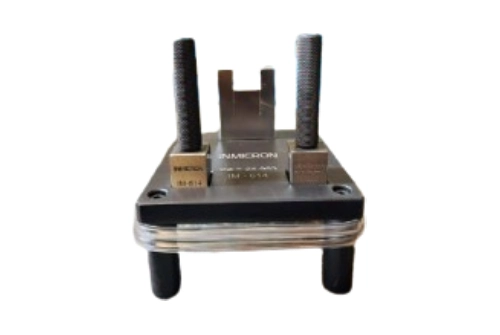
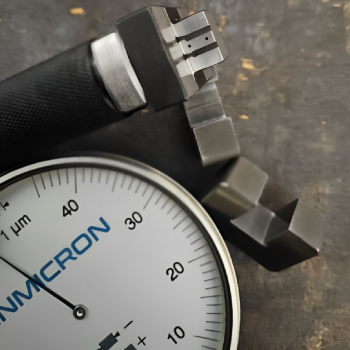
An air width gauge is a precision instrument used to measure the width of narrow features such as slots, grooves, and internal or external dimensions of parts. These gauges rely on air pressure to measure the gap or width of a workpiece. The concept is similar to air ring gauges, where air is forced through the gap between the gauge and the part. By measuring the amount of air flow or pressure, the gauge can determine whether the part meets the specified dimensional tolerances.
Air Width Gauges:
Air width gauges are commonly used to measure the *width of slots* in parts, particularly when the slots need to be within specific tolerances. Examples include keyways, grooves, or slots in mechanical components like gears, shafts, and housings.
part or workpiece, ensuring that the threads are properly formed and within the specified limits (such as pitch diameter and thread depth).
These gauges are used to measure the width of grooves or channels in parts. Whether it’s for grooves in bearings, seats for O-rings, or grooves for seals, air width gauges ensure that the parts meet the exact width specifications required for proper function.
Air width gauges are effective for measuring the gap between two surfaces in a workpiece. For example, in a part with two parallel surfaces (such as a slot or groove), the air width gauge can quickly verify whether the gap is within tolerance.
These gauges are especially useful for measuring thin, narrow features that may be difficult to measure using traditional mechanical calipers or micrometers. Parts with small grooves, slots, or gaps can be inspected quickly and accurately using air width gauges.
In industries where high precision is crucial, such as aerospace, automotive, or medical device manufacturing, air width gauges are used to inspect critical dimensions that require tight tolerances and exact fit. This ensures the parts will fit into assemblies correctly and function as intended.
Air width gauges can measure the width of narrow bores, openings, or slots that may not be easily accessible with mechanical measurement tools. This makes them useful for parts that have small internal dimensions, such as those found in intricate mechanical assemblies.
Air width gauges can help detect taper or distortion in slots and grooves. For instance, if a groove is tapered (wider at one end than the other), the air flow measurement will be inconsistent, signaling a potential issue with the part’s geometry.
Air width gauges are ideal for high-volume production environments where thousands of parts need to be inspected quickly. These gauges can easily check whether slots, grooves, or gaps are within specified tolerances, helping ensure consistent quality and fit across many parts.
In parts that undergo significant wear, such as in engines or machines, air width gauges can be used to inspect the width of slots or grooves to detect any deformation* or wear that may have occurred over time. This is important for ensuring that parts continue to function as intended.
Advantages of Using Thread Plug Gauges:
One of the biggest advantages of air width gauges is that they measure without direct contact with the part. Since there is no physical interaction with the workpiece, there is no risk of damage or deformation to the part being measured, ensuring the integrity of delicate or high-value components.
Air width gauges are highly sensitive and capable of detecting even minor variations in the width of narrow features. This makes them ideal for applications where precise measurements are required, such as in aerospace, automotive, and medical device manufacturing.
These gauges are fast and allow for quick measurements, making them ideal for high-volume production environments. The ability to measure and inspect parts in a short amount of time improves overall production efficiency and throughput.
Since air width gauges do not physically touch the workpiece, there is no wear on the part, which means it can continue to be used in its intended application without any risk of alteration during the measurement process.
Air width gauges are particularly suited for measuring thin, narrow, or hard-to-reach features like small slots or grooves, where traditional measuring tools like calipers or micrometers may not be able to provide the same level of accuracy or ease of use.
Air width gauges are clean and contamination-free since there is no physical contact with the workpiece. This is particularly important in environments where parts must remain free of contaminants, such as in the food, pharmaceutical, or semiconductor industries.
These gauges can be used to measure a wide range of features, from small grooves and slots to more complex internal gaps or external widths. Their versatility makes them adaptable to different types of components and industries.
Traditional mechanical gauges can wear over time due to frequent contact with parts, which can affect their accuracy. Air width gauges, however, do not wear because there is no physical contact with the part, ensuring long-term measurement consistency and reliability.
Air width gauges can provide more accurate readings than traditional mechanical methods because they use air flow as the measurement medium, which can detect very subtle changes in width. This results in more precise measurements, especially for parts with tight tolerances.
Air width gauges are typically easy to operate. The process is straightforward, with simple setups and quick measurements. Operators do not need specialized training to use the gauges, which can reduce the chances of operator error.
Air width gauges are often compact and lightweight, making them portable and easy to handle. This is especially useful in on-site inspections, field measurements, or for use in environments with limited space.
Since air width gauges do not have moving parts and there is no direct contact with the workpiece, they require minimal maintenance. This lowers operational costs and extends the life of the tool.
Air width gauges can be integrated into automated inspection systems for real-time quality control. Automated measurement can significantly speed up the inspection process in mass production settings, allowing for continuous quality monitoring without the need for manual intervention.
Conclusion:
Air width gauges offer a highly effective and efficient solution for measuring the width of narrow features such as slots, grooves, and gaps in parts. Their ability to provide non-contact measurements with high precision and sensitivity makes them an invaluable tool in industries requiring tight tolerances and high-quality standards. With advantages like speed, versatility, minimal maintenance, and the ability to measure delicate features without causing damage, air width gauges are ideal for high-volume production environments and for inspecting parts in sectors like automotive, aerospace, medical devices, and manufacturing. They not only improve measurement accuracy but also enhance production efficiency and consistency.