
Thread Plug Gauges

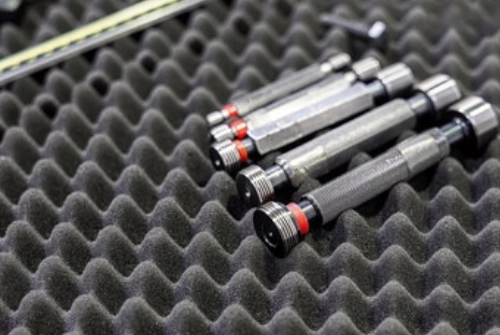
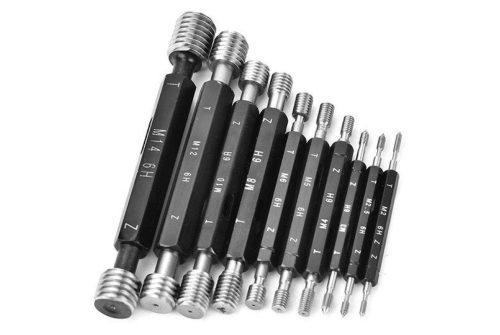
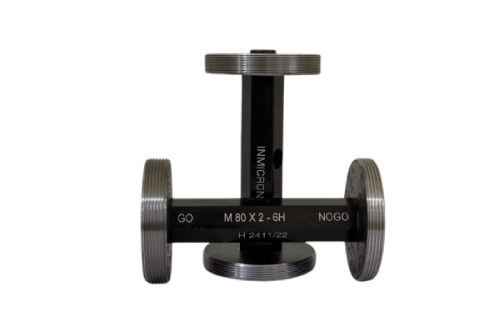

Thread Plug Gauges are essential tools used to measure the internal threads of holes in manufacturing and quality control processes. They are used primarily to check the dimensional accuracy and quality of internal threads (such as those found in nuts, bolts, or any threaded components). Thread plug gauges are designed to be inserted into threaded holes to determine if they meet the specified limits of size and thread form.
Uses of Thread Plug Gauges:
Thread plug gauges are primarily used to inspect the internal threads of a part or workpiece, ensuring that the threads are properly formed and within the specified limits (such as pitch diameter and thread depth).
They help in verifying whether the internal threads conform to specific tolerance requirements, ensuring the parts will fit with the corresponding male (external) threads properly without issues like tightness or looseness.
These gauges often come in two variants
- Go Gauge:*It is used to check if the threaded hole is large enough to accept a matching external thread.
- No-Go Gauge: It is used to ensure that the hole is not too large or out of specification.
This method ensures that the thread fits and is functional for assembly.
Thread plug gauges are used at the final inspection stages of manufacturing to check the quality of threaded holes before they are released for further use or assembly. They ensure that any deviations from the required specifications are detected before shipment.
They can be used during the manufacturing process to confirm that internal threads are not over-tapped, ensuring the material around the thread is not damaged, which could weaken the connection.
In addition to measuring the size and tolerance of threads, thread plug gauges can also check whether the thread form (e.g., UNC, UNF, or metric threads) conforms to the design specifications.
Thread plug gauges are used in mass production environments to continuously monitor the consistency of threading operations. They help operators maintain quality without the need for continuous caliper measurements.
Advantages of Using Thread Plug Gauges:
Thread plug gauges are manufactured to high precision and can provide accurate and reliable measurements of internal threads. This ensures that threaded parts meet the required specifications and function properly.
These gauges are simple to use, requiring little training. They can quickly verify whether a threaded hole is within acceptable limits without requiring complex measurement tools.
Thread plug gauges are a cost-effective way to maintain thread quality during production. They are durable and provide reliable results over extended periods of use without requiring expensive instruments.
The Go/No-Go design allows for quick, clear decisions. The Go gauge confirms that the thread will accept a corresponding external part, and the No-Go gauge ensures the hole isn’t too big or flawed.
They help maintain consistent quality in high-volume production by quickly checking threads as parts move through different stages of manufacturing.
Thread plug gauges are often made from high-quality steel or carbide, making them durable and capable of withstanding frequent use without significant wear.
Unlike larger machines or sophisticated measurement equipment, thread plug gauges are compact and portable, making them convenient for use in various settings (e.g., workshops, assembly lines, or on-site).
The No-Go gauge ensures that parts are not over-threaded or misaligned, preventing damage to threads that could otherwise affect the performance or strength of the fastener.
Using thread plug gauges helps ensure that threaded holes are consistently manufactured to specification, which improves the overall quality of finished products and reduces the risk of rework or customer returns.
Conclusion:
Thread plug gauges are indispensable tools in the world of precision manufacturing. They offer an efficient and reliable way to inspect internal threads, ensure quality, and maintain the high standards required for threaded components. Their simplicity, durability, and ability to provide quick feedback make them invaluable in both production and quality control environments.